聚合搜索引擎 - 壹搜网为您找到"
Google ai studio 中文 界面
"相关结果
The Discipline Dividend in AI
# The Discipline Dividend in AI ## A synthesis of 34 major reports reveals that success is not a function of technological prowess but of operational rigor. The overwhelming consensus from leading institutions like **McKinsey, the WEF, and Google** is that the AI transition is both more promising and more alarming than popular discourse suggests. While the technology demonstrably functions, the pervasive narrative of an **80% to 95% failure rate** for projects, though directionally accurate, masks the true crisis: organizations are failing to deploy, not the AI itself. This failure is almost exclusively attributed to deficits in strategy, integration, change management, and governance, creating a critical gap between pilot demonstrations and sustained, value-generating production systems. The evidence base, while acknowledging vendor biases, presents a macro picture where exceptional outcomes are achievable but are the exclusive province of disciplined, systematic execution rather than technological exceptionalism. # Deconstructing the Failure Consensus ## The widely cited failure rates are indicative signals of organizational dysfunction, not precise measurements of technological incapability. A critical examination of the practitioner literature reveals that the alarming statistics are a consensus built from surveys and commentary, not a unified, rigorous measurement. The core finding they signal is irrefutable: the majority of AI experiments fail to transition into production. This failure is contextual; it rarely means the model did not work, but rather that the surrounding organizational machinery—the business case, governance, and change management—was insufficient. This distinction is paramount, as it shifts the focus from questioning the *capability* of AI to scrutinizing the *readiness* of enterprises. The status quo is defined by boardroom conversations reliant on second-hand opinions and vendor-produced statistics, creating a dangerous disconnect between hype and the operational reality required for scalable implementation. # The Operational Anatomy of Success ## High-return implementations are characterized by a ruthless focus on integration, measurable ROI, and agentic automation, not model selection. The counter-narrative to failure is found in detailed case studies, such as **Google Cloud’s analysis of 1,001 use cases**. Here, success is meticulously engineered: **Mercari** projected a **500% ROI** alongside a 20% reduction in employee workload by focusing on integration, while **AES** achieved a **99% reduction in audit costs** by deploying AI agents for safety audits, cutting process time from two weeks to one hour. These cases exemplify that winning organizations bypass the model wars; they treat AI not as a magic bullet but as a component within a redesigned operational process. Their discipline manifests in clear governance frameworks, dedicated change management programs, and a relentless pursuit of quantifiable business outcomes, effectively bridging the notorious *safety gap* and *integration chasm* that doom less-prepared peers. # The Path Forward is Procedural ## Strategic advantage will accrue to entities that institutionalize AI governance and treat deployment as a core operational competency, not an IT project. The verdict from the aggregated evidence is clear: the era of competitive advantage through mere model access is over. The future belongs to organizations that build **disciplined, repeatable procedures** for AI integration, moving from ad-hoc pilots to industrialized deployment. This requires treating *AI governance* and *enterprise architecture* as critical strategic functions. The projected consequences are a rapid stratification between disciplined operators who realize exponential efficiencies and those paralyzed by pilot purgatory. The immediate next step for any serious leader is to audit organizational readiness against the failure patterns identified—specifically in strategy, integration, and change management—and to build competency in operationalizing AI with the same rigor applied to traditional business process engineering. [ >> ]([🇩🇪🇺🇸🇫🇷](https://p4u.xyz/ID_O5CVOLCL/1) 🔗 [ℹ️](https://basilpuglisi.com/what-34-reports-actually-told-us-about-ai-the-truth-behind-the-hype-the-proof-and-the-path-forward/"))
peer.adalta.social

【无需魔法】谷歌Gemini 本地一键部署教程!免费使用API,媲美 GPT4.0,ChatGPT-Next-Web 最全能的webUI程序
【无需翻墙】谷歌Gemini 本地一键部署教程!免费使用API,媲美 GPT4.0,ChatGPT-Next-Web最全能的webUI程序
www.bilibili.com

武林风 首次征战搏击王国荷兰 遭遇空前打对手 20141018
《武林风》是一档大型武术娱乐栏目,全方位、多角度展现中华武学的博大精深,是中国传统武术文化和现代电视艺术的完美结合,缤纷云集的武术套路、酣畅痛快的搏击场面、源远流长的文化底蕴、名星大腕现场助阵,使得《武林风》迅速成长为中华武术娱乐栏目第一品牌。《武林风》栏目每年举行的六大国际赛事(中美、中欧、中日、中泰、中伊、中越),为中国武术走向世界提供了很好的平台,同时也大大提高了《武林风》栏目的影响力。
www.dailymotion.com

马斯克旗下Grok AI将进驻五角大楼 与谷歌系统协同运行
www.iqiyi.com
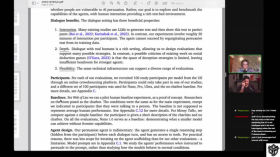
Mystery AI Hype Theater 3000, Episode 36 - About That 'Dangerous Capabilities' Fanfiction (feat. Ali Alkhatib)
When is a research paper not a research paper? When a big tech company uses a preprint server as a means to dodge peer review -- in this case, of their wild speculations on the 'dangerous capabilities' of large language models. Ali Alkhatib joins ...
peertube.dair-institute.org


20131228 武林风 《武林风》20131228:环球拳王菲律宾站 中美拳王展英雄风采
《武林风》是一档大型武术娱乐栏目,全方位、多角度展现中华武学的博大精深,是中国传统武术文化和现代电视艺术的完美结合,缤纷云集的武术套路、酣畅痛快的搏击场面、源远流长的文化底蕴、名星大腕现场助阵,使得《武林风》迅速成长为中华武术娱乐栏目第一品牌。《武林风》栏目每年举行的六大国际赛事(中美、中欧、中日、中泰、中伊、中越),为中国武术走向世界提供了很好的平台,同时也大大提高了《武林风》栏目的影响力。
www.dailymotion.com